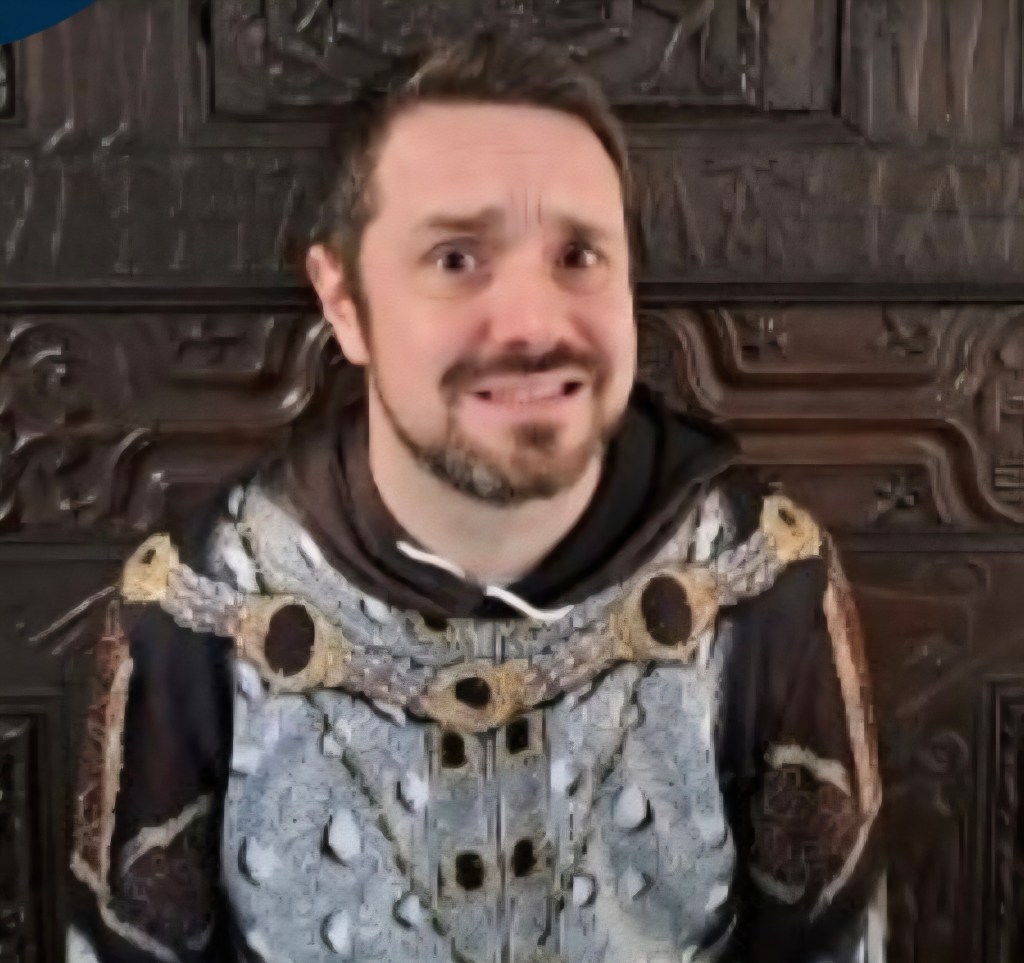
Everyone has heard of King Henry VII, OMF Theatre are bringing their play about him to the Edinburgh Fringe this year. Find out more in this interview with them about why they have chosen the relationship he had with his Groom!
When and where are you performing at the Fringe this year?
We are performing during the last week of the Fringe with a preview on the 24th August and then going from 25th to the 30th at 10am at Paradise in the Vault (Venue 29).
What was the inspiration for your show?
I love Henry VIII, he is such a complex and at times simple character, so flawed and so hopeful, especially in his early reign. I teach History and have brought Henry VIII to life for children for many years.
I also create comedy and the comedy to come from Henry and his Groom of the Stool (or bathroom attendant, or Royal bottom wiper) was too great an opportunity to miss.
Most importantly, the notion of male grief inspired me – this show says something. I have wanted to put on a show about this for so long and often hear back it isn’t what people want to see. I agree to some extent, but this show has it in within the context of a famous king and toilet humour and so what needs to be said can potentially reach a big audience.
The final inspiration was for me as an actor. I have been doing fantastic comedies with my dad and they’ve been popular; I wanted something to show my range as a leading man and what better test to go from toilet humour to tragedy as arguably the most instantly recognisable Briton in History.
When did you first step on the stage as a performer?
Bugsy Malone school play, Our Lady’s RC High School, Preston, Lancs. But as a man I was approaching 33, same age Jesus was when he got out and about and I decided if not now, when? So, I started creating sermons for church, for family services which had elements of my teaching and elements of drama. They went down well and I felt if some of my plays were going to get made, I might have to act in them. I was always a writer, but I bit the bullet and put on a one man show in 2018. After the buzz of that I made Apocalypse Kernow where I played around 30 characters to showcase my comedy voices and range.
What is the best piece of advice about working in Theatre you have received?
A play is like a job interview. The actual interview or performance is a significant part of the event, but it is not all of it. When you chat to potential colleagues, that is also the interview, how you say hello to everyone on the way in, that is also the interview. The play is always on. Every moment the play is going. When you give out the flyers and have selfies dressed as Henry VIII, that’s the play. When you bow at the end, that’s the play. When you are interviewed online that is the play.
Have you been able to stay within a realistic budget for your production? How have you raised funds to put your show on?
The mantra of OMF is to create the absolute best work we can that is budget free. For our previous show Apocalypse Kernow, I played 30 characters, to differentiate them I used hats and voices. So yes, we’ve stayed within budget but… you have to be more savvy with little to no budget. That means the moment you put pen to paper you have to write the play as if there’s no budget – as in there’s no money.
That then applies to how many actors you have. How many effects or how much advertising you can do. With actors, the piece is about William and Henry’s friendship but it also about child loss, despite Katharine of Aragon never appearing on stage. This was decided at first draft stage, I’d argue it makes the piece even more unique.
I’m not one to ask for money, Patreon’s and the like. Low budget for me frees up the imagination because everything is still possible. For example, the bespoke tapestries Henry has made for his toilet with himself dressed as his hero Henry V on them are up to the audience to imagine, that makes them funnier. I could’ve done the same with the actual stool, or toilet as we would call it, which might have been funnier but leaning in that position for fifty minutes wouldn’t be good for my health so we made a stool.
There are still costs though and I’ve been working my regular job as a History and Sociology teacher, as well as an exam marker for History and Sociology as well as taking a job as a trip lead for the school. So working four jobs I guess is how we can afford to go, which is stupid and a bad idea. Don’t be inspired by that. Not seeing your kids is not worth it.
So many people have been so kind as well. The accommodation is free, it wouldn’t be possible to stay in Edinburgh otherwise, thank you to Stephen and Robyn. The music used is out of copyright as it’s from the 16th century and school children have re-recorded it, thank you to Penrice Academy for this. The costume is from local panto groups and my wife kindly bought my Henry VIII outfit years ago (as you do), thank you to Paul and Natalie. The stool is amazing and made by Drew, an actual blacksmith, thank you Drew. Additional thanks to Amy and my dad Steve, who is my hero.
Who is your target audience?
For people 30 plus who can enjoy both tragedy and comedy. History lovers, Shakespeare lovers – this is like Shakespeare if Shakespeare wrote a play about a toilet.
For a comedy audience the humour is often used to disarm the audience before moving into much darker emotional territory which means it might be perfect for people who wouldn’t normally choose a “historical drama.” There are running jokes, absurd situations, lots of toilet humour and a little audience participation.
For history lovers, the play focuses on William Compton, the Groom of the Stool aka the King’s toilet attendant, a unique perspective when compared to Wives & Wolsey. That’s a genuinely new perspective. The piece explores court politics, the emotional impact of repeated infant deaths and the behind closed doors friendship of William and King Henry VIII. Friendship above all is the heart of the piece, what it’s about.
For a Fringe audience the focus on contemporary telling of history with minimal staging and props may entice. People who love relationship driven drama will see the relationship of William and Henry build and then fracture. Perhaps this is a piece not for children (my own children are not allowed to look at the script) or people offended by toilets, the stool jokes are not occasional, they are fundamental to the story.
At its core, Henry VIII & His Groom is about two men navigating friendship in impossible circumstances. One holds absolute power. The other holds uncomfortable truths. Together they create a compelling portrait of loyalty, loss and the price of being close to greatness.
The play’s biggest strength is that it attracts people with the promise of a comedy about Henry VIII’s toilet attendant, then gradually reveals itself to be a surprisingly moving story about friendship, grief, loyalty and the human cost of power. That combination gives it appeal well beyond the usual historical-theatre audience.
What Themes Might We See in the Piece?
Masculinity – Henry is constantly trying to prove himself, as a king, as a warrior, as a husband and as a father and many of his destructive choices within the piece stem from his insecurities regarding these.
Power and Isolation – One of the most compelling ideas is that the king’s closest friendship exists with the person who literally cleans up after him. The more powerful Henry becomes, the fewer people are willing to tell him the truth. William’s honesty to Henry both assists his career and places his life at great risk.
Grief – The play focuses on grief told through historical comedy. The repeated loss of children drives much of the emotional story. Some of the strongest scenes involve Henry processing grief in private, away from public expectations. This has been a piece where one’s unique take, thoughts, actions during grief are on full display – Henry goes through every emotion and action during the piece whether that be going to the toilet, having affairs, being the husband God intended him to be, or being sick, drunk, violent, unable to move. This is history, up close, personal.
Friendship – The central question becomes whether genuine friendship can survive a massive imbalance of power. As funny as it is, everyone knows this friendship won’t survive because it’s Henry VIII, after all.
https://www.edfringe.com/tickets/whats-on/henry-viii-and-his-groom





Leave a Reply