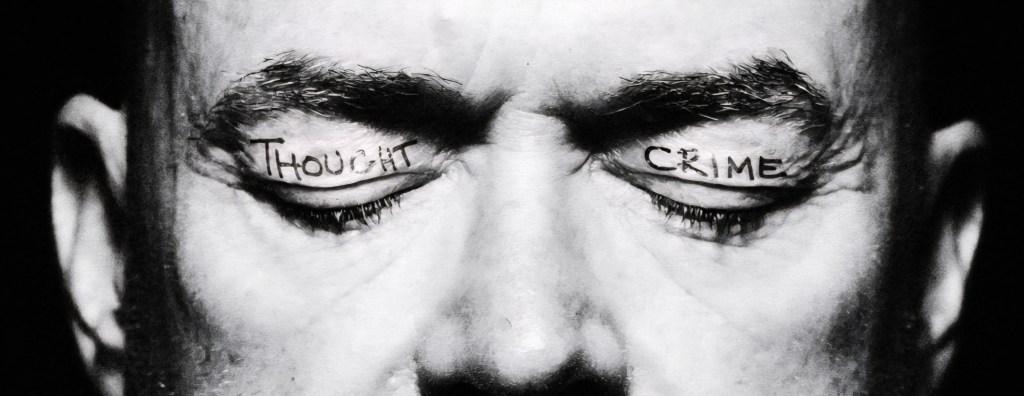
Big Brother has become part of everyday conversation, a phrase that has outlived the dystopian world George Orwell imagined in 1984. David Bowie was sufficiently captivated by the novel to plan a musical adaptation, eventually drawing on its themes for Diamond Dogs, his 1974 album. “We are the dead” is among the lines that linger, a reminder of Orwell’s ability to make the language of oppression sound both ordinary and ominous.
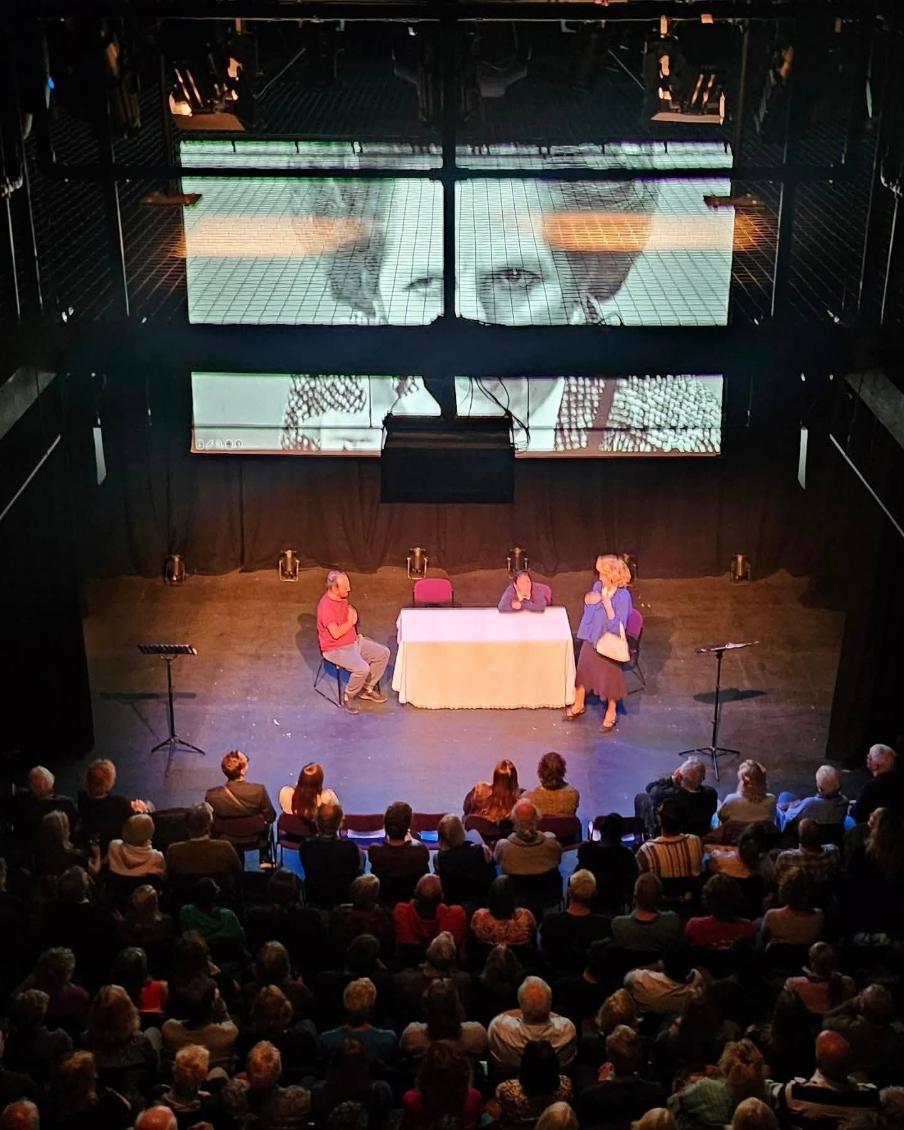
Directed by Dominic Hill, this production takes us into a world of fear, surveillance, and psychological brutality, where the distinction between private thought and public obedience begins to disappear. The physicality of the performances brings Orwell’s vision into close proximity to the audience.
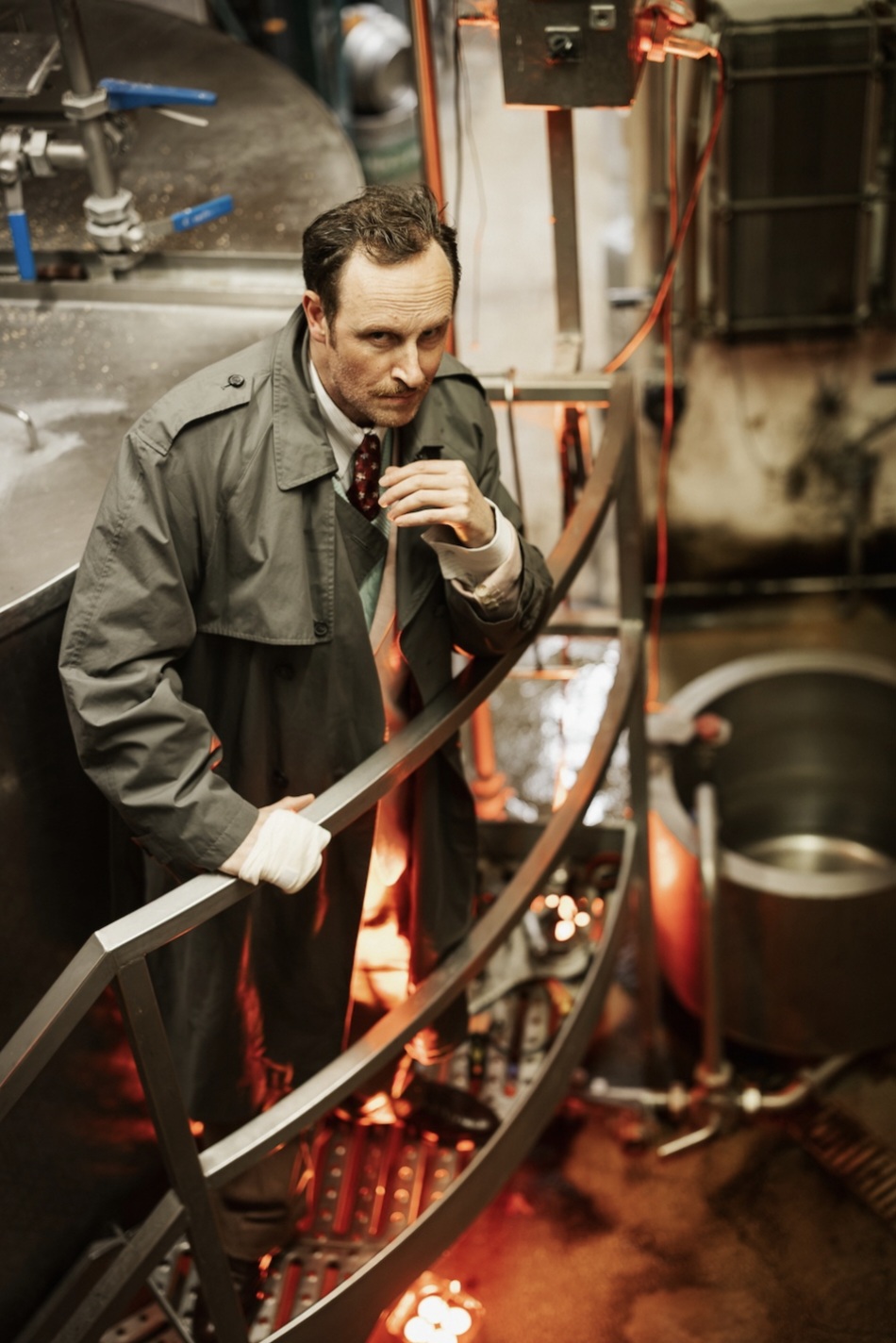
Jack Tarlton plays both Orwell and Winston Smith, linking the author to the fictional character whose suffering has come to define his most famous novel. The production returns to Orwell himself, depicting his journey to Scotland for tuberculosis treatment and bringing his political convictions into the drama. There is a distinctly Scottish dimension to these scenes, which places the author’s illness alongside the experiences that shaped his writing.
A debate with Dr Dick, played by Robert Jack, about the Spanish Civil War recalls a conflict that left a lasting mark on Orwell. Having fought on the Republican side against Franco, Orwell witnessed bitter factionalism and political persecution within the anti-Franco movement. Dr Dick, by contrast, says he fought on the fascist side, bringing their opposing experiences into sharp focus. Orwell completed an early draft of 1984 in November 1947, while suffering from tuberculosis, and continued revising the novel before its publication in 1949.
His treatment at Hairmyres Hospital in East Kilbride adds an intriguing dimension to a story more commonly associated with the bleak, imagined world of Airstrip One.
The relationship between Winston and Julia remains at the heart of the drama. Their intimacy is an assertion of humanity, a refusal to surrender completely to a world in which every thought and gesture is subject to control. Tarlton carries the connection between Orwell and Winston through the production, while Jessica Hardwick brings emotional force to Julia’s relationship with him. The production is intensely physical, the actors’ bodies becoming instruments of control and resistance.
One of the most disturbing sequences comes when Winston is subjected to a brutal beating, the violence so visceral that it appears as though his toenails are being torn out. Later, in Room 101, the prospect of having rats set upon his face brings him to the point of surrender. Winston begs for Julia to suffer in his place, exposing the depths of his desperation and the Party’s ability to destroy the loyalties that have sustained him.
Irene Allan gives an excellent performance across her various roles as Mrs Syme, Mrs Ogilvy, Mother and Nurse Rankin, bringing distinction to each character. Robert Jack delivers a convincing portrayal of Dr Dick, he reeks of a certain Scottish establishment archetype. Written in the shadow of the Second World War, 1984 carries the legacy of Hitler’s Germany, from the demand for absolute loyalty to the manipulation of language and the rewriting of history. The Party’s doublethink, in which people are expected to accept contradictory versions of reality, remains particularly chilling. Hill’s production captures the oppressive force of that vision. Winston and Julia’s struggle to preserve their humanity gives the story its emotional weight.
What makes 1984 so unsettling today is not that Orwell predicted every detail of the future but that his warning about power, propaganda, and the manipulation of truth remains so recognisable. The question is no longer just about whether Big Brother is watching, but whether we can trust what we are being told.
Four Stars.
Reviewed by Richard Purden.




Leave a Reply