David Baddiel wrote a one man show called “My Family: Not The Sitcom”. To avoid any confusion, the latest production at Marylebone Theatre could have been called Yentl: Not The Barbra Streisand Musical for this production couldn’t be further from the sentimentalism that pervades the film that Isaac Bashevis Singer, the writer of the original storythought was a splashy production that has nothing but commercial value”.
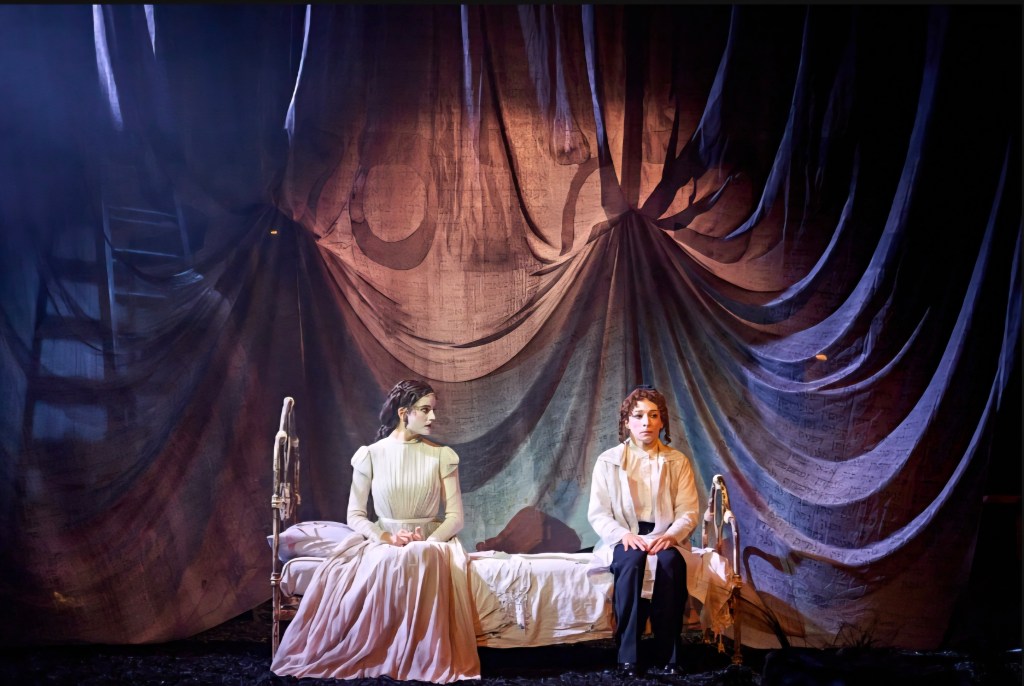
This Yentl, is the acclaimed Australian production from Kadimah Yiddish Theatre now making its London premiere. Superbly directed by Gary Abrahams, this bold adaptation by Abrahams, Elise Esther Hearst and Galit Klas, strips away the schmaltz of the more famous interpretation and returns the tale to something darker and more spiritually charged and shapes it into a lean, atmospheric piece of theatre that feels closer to folklore than traditional drama.
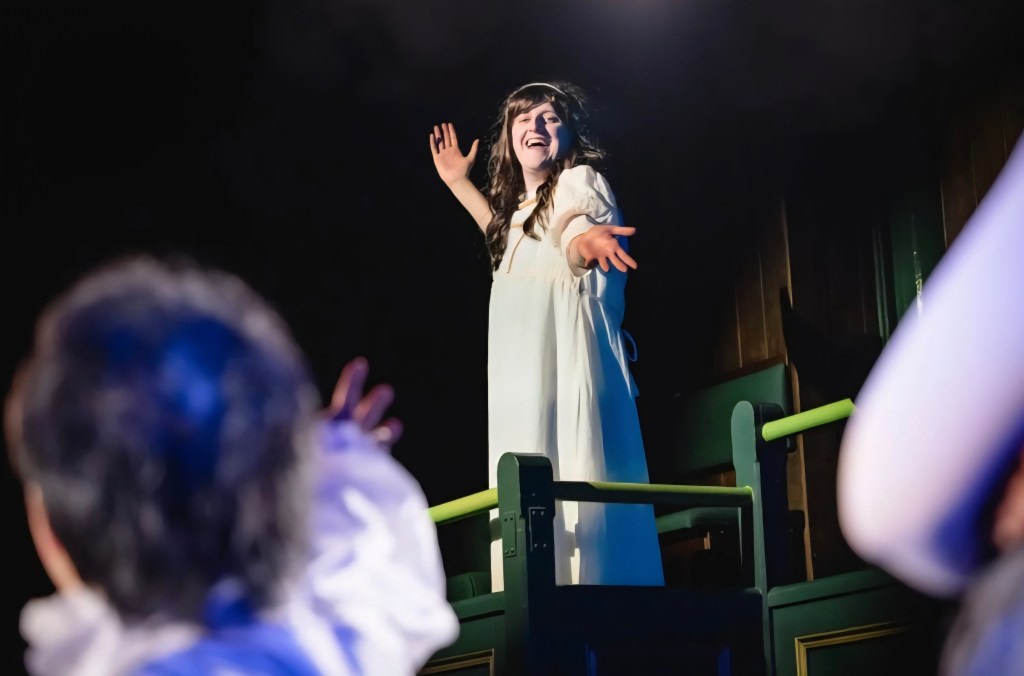
Set in a Polish shtetl in the 1870s, the story follows fiercely intelligent Yentl, a young Jewish woman forbidden by religious law from studying the sacred texts. When her father dies, she disguises herself as a man and enrols in a yeshiva, plunging into a world of scholarship that has always been closed to her. The deception opens the door not only to intellectual freedom but also to emotional chaos, as her new identity entangles her with fellow student Avigdor and the thoughtful Hodes. What surprises is the focus on the sexuality of the three main characters and its depiction of gender identity and the naivety of their confusion.
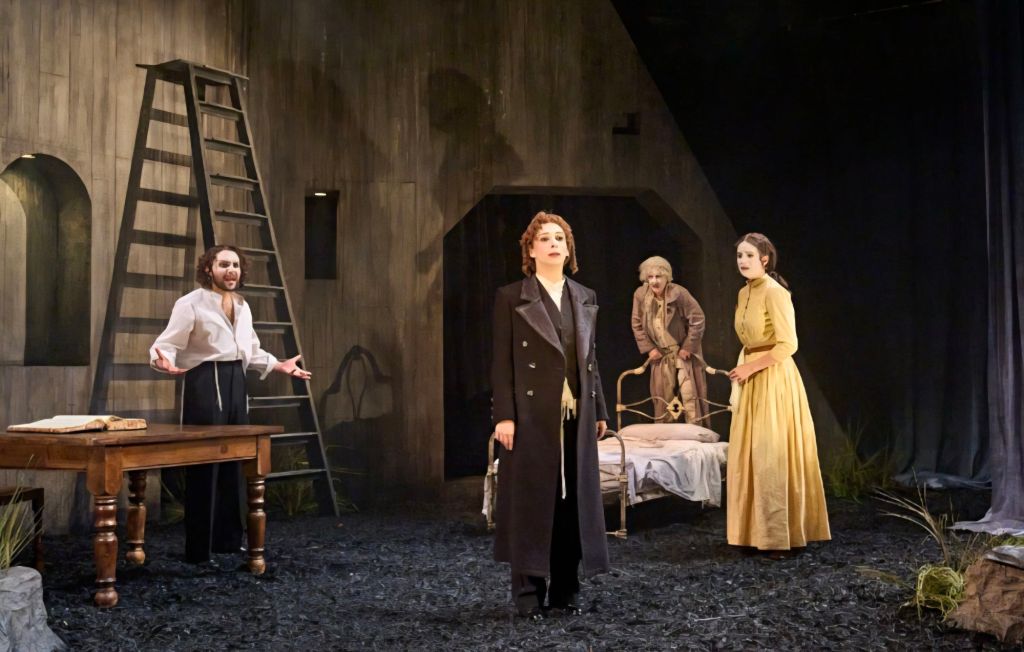
Amy Hack gives a quietly compelling performance in the title role. Her Yentl is not a fiery rebel but a restless thinker, driven by curiosity as much as defiance. Hack captures the character’s exhilaration at discovering a world of ideas, while never losing sight of the danger and loneliness of living a double life. It’s an intensely focused performance that anchors the whole production. She’s well supported by Genevieve Kingsford as Hodes and Ashley Margolis as Avigdor who both give splendid, nuanced performances.
The staging uses a curtain to great effect and Dann Barber’s towering set is almost brutalist in its architecture. The lighting by Rachel Burke and the sound design from Max Landvert add to the atmosphere of this already atmospheric piece of theatre. The bilingual script — shifting between English and Yiddish with surtitles — adds an evocative texture, grounding the play in the cultural world that produced it while making the emotional stakes feel immediate.
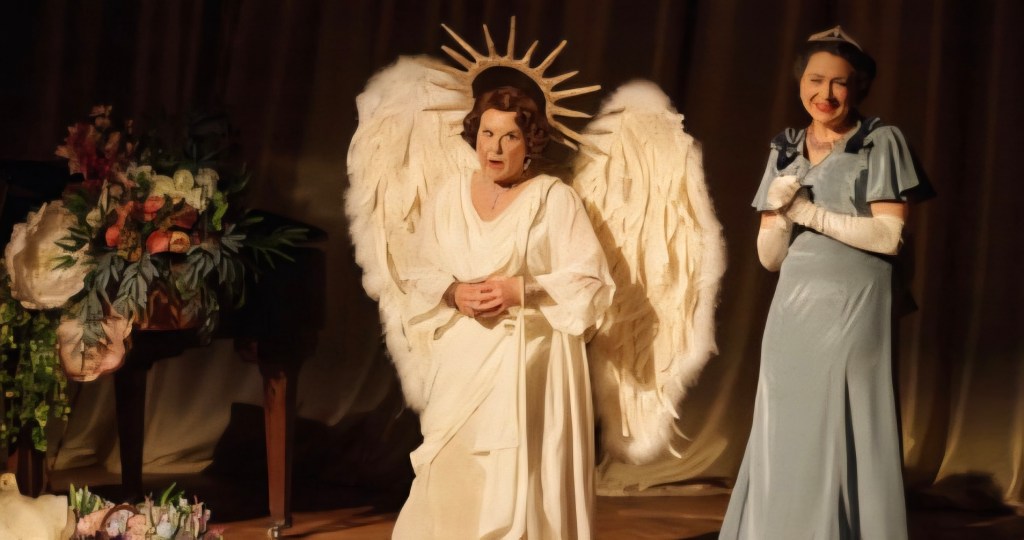
One of the production’s most unusual devices is a mysterious onstage presence known as “The Figure”, played with impish authority by the wonderful, mesmerising Evelyn Krape. Acting as a manifestation of Yentl’s inner urges and doubts, the character turns the drama into something almost mythic — part psychological study, part spiritual fable. She narrates, plays various parts and at times seems to guide the story to her will driving the narrative forward as it builds towards its inevitable conclusion.
Yentl has great intelligence and originality which makes it consistently compelling. In an era when theatre often plays it safe, Yentl feels thrillingly uncompromising: a story about faith, gender, sexuality and knowledge told with imagination and nerve.
Four Stars.
Reviewed by Alan Fitter.


 Theatre, Art and Film Reviews
Leave a comment