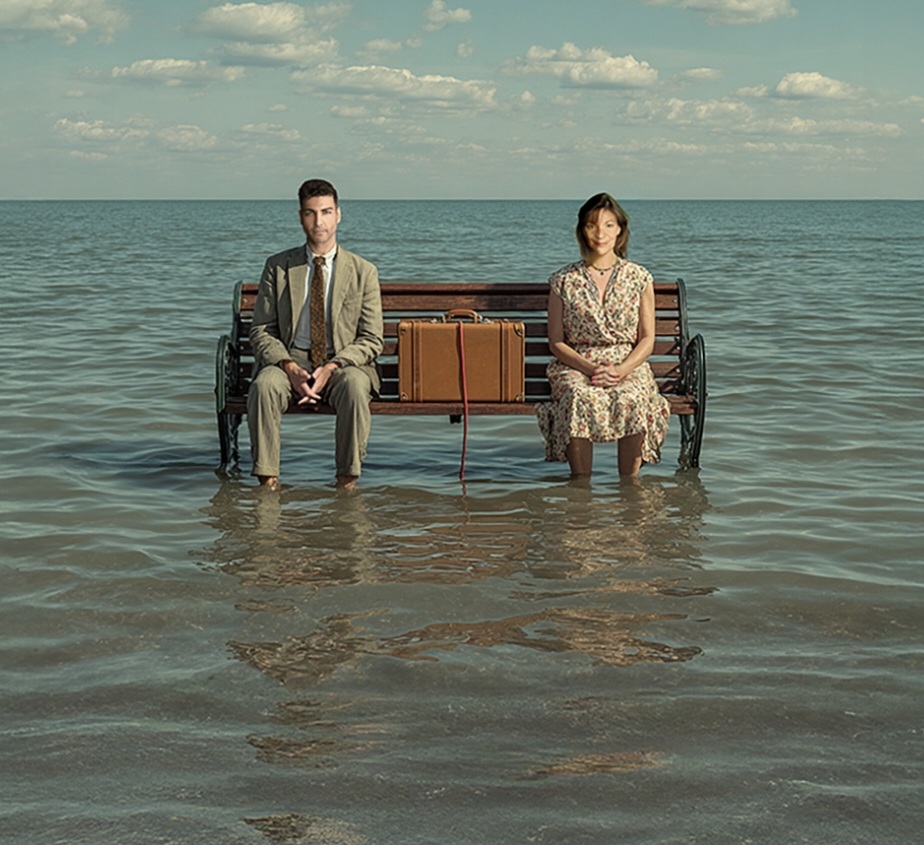
Dick Fiddler is Dead was on at The Etcetera Theatre. I caught up with the team behind it after the performances had finished. However, it’s my understanding that the play will be back.
Is the Voila Theatre Festival your production’s debut performance?
Yes, it’s a time of firsts. The first showcase of my play in development, and my debut as a playwright.
Who has been your inspiration from the theatre world?
The representatives of the Theatre of the Absurd have had a profound impact on my sensibility as an artist. What I love about that school is its intellectual engagement, the way it plays with the inconsistency of place and time, the fluidity of meaning, and the challenge it poses to logic and convention. However, what I often find missing in that tradition is emotional connection.
That gap inspired me to experiment with bringing two seemingly opposing languages together, absurdism and emotional realism, in the hope of creating a space where the audience not only thinks but feels. I called this emerging form Emotional Absurdia: a world where things might not make sense intellectually, but they resonate emotionally.
In Emotional Absurdia, language evolves with the characters. It begins as something artificial and rhythmical, detached from naturalistic speech, and gradually becomes more fluid, poetic, and metaphorical as transformation takes place. Place, time, and reality remain inconsistent; inanimate objects can gain agency and even become characters. Yet everything is magically grounded in emotional truth, so despite the absurdity, it all somehow makes sense.
I first tested this form with audiences in my debut play Dick Fiddler is Dead, and the reception was truly heartening. People laughed at its quirkiness, but they also connected deeply with its humanity. That balance of thought and feeling is exactly what I strive for in my work.
Where do you draw your inspiration from as a creative?
My inspiration comes primarily from observation of human behaviour, of how people speak, contradict themselves, and reveal their vulnerabilities in unexpected ways.
I’m also drawn to sociological trends and collective tendencies. How societies evolve, how beliefs shift, and how we adapt to change. I’m interested in what these transformations say about our search for meaning, connection, and identity.
At the same time, philosophical questions are at the core of my creative process. I’m curious about what it means to exist, to love, to fail, to forget. My work often lives at the intersection, where big ideas about life meet the intimate realities of being human.
Are you planning on taking your production to another industry festival in the future?
I see the Edinburgh Fringe as the ideal next stop in my play’s journey. Dick Fiddler is Dead feels like a natural fit for the Ed Fringe because it embodies the kind of bold, inventive theatre that festival audiences are hungry for. It’s unconventional, playfully absurd in tone, and yet deeply emotional at its core, a combination that resonates perfectly with the Fringe’s spirit of experimentation and discovery.
What is your favourite part of the theatre industry?
I love that theatre is immediate and human. It exists only in the present moment, in that exchange between performer and audience. No two performances are ever the same, and that unpredictability is what makes it so powerful and interesting to me.
On a deeper level, I’m drawn to theatre’s ability to provoke thought and empathy simultaneously. It’s a space where philosophy and emotion can coexist, where absurdity can reveal truth, and where the boundaries between laughter and heartbreak blur.
What one piece of advice would you pass onto new theatre students?
Be brave and take risks, to make something that might not make sense at first but feels true. That’s often where the most exciting discoveries happen.
https://www.voilafestival.co.uk/events/public-sharing-dick-fiddler-is-dead/


 Theatre, Art and Film Reviews
Leave a comment